Taurus James: Taurus M. James - Helping Other People Elevate - Taurus M. James is HOPE ( Helping Other People Elevate)

Sorry!

Skip to MenuSkip to NavigationSkip to Main Content

Here are some helpful links instead.

image for What Are You Built For?

One of the questions I challenged the young men to think about was simple:

What are you built for?

I wasn't only talking about sports.

I was talking about life.

I wanted these young men to understand that The Creator created each one of us specifically. By design, we are built for purpose.

The Creator knows that purpose.

The problem is, we often don't.

So how do you begin figuring it out?

Coach T observes young athletes preparing together for an outdoor physical challenge.
Purpose begins with paying attention to how you were created and seeking The Creator.

Look at How You Were Built

Sometimes the obvious is a good place to start.

Look at me physically.

I'm a smaller man. I'm athletic. I'm light on my feet. I naturally move at a faster pace.

I can look at my body and know I'm not built like a powerlifting linebacker.

That's not an insult to me.

That's an observation.

My physical design gives me information about myself. I'm built more for quickness and speed than moving massive amounts of weight.

You can do the same thing.

Look at yourself.

Pay attention to what you see.

And don't stop with your body.

What comes naturally to you?

What do you notice that other people miss?

How do you respond when you're under pressure?

What kinds of problems do you naturally want to solve?

What have you learned through your experiences?

What keeps showing up in your life?

Those observations don't automatically tell you your purpose.

But they can give you clues.

Study Yourself

I urge young men and women to take time to examine themselves.

Pay attention.

Take notes.

Write down what you learn about yourself.

You don't have to have your entire life figured out today.

You're learning.

So learn you.

As you grow, you'll notice things you didn't notice before. Some assumptions you made about yourself may prove wrong. Other characteristics will continue showing up again and again.

Pay attention to the patterns.

But there is an important warning here.

Don't stop with yourself.

A young athlete reflects after training and writes personal observations in a notebook.
Self-examination is an ongoing practice. Pay attention and take notes.

Ask The One Who Built You

If something has been intentionally designed, the best source for understanding its purpose is its creator.

That's why I urge young people to seek purpose from The Creator first.

Yes, examine yourself.

Yes, recognize your abilities.

Yes, pay attention to your experiences.

Yes, listen when trustworthy people recognize something in you.

But none of those should replace seeking The Creator.

Go to Scripture.

Read what The Creator has said about you.

Psalm 139:14 tells us that we are fearfully and wonderfully made.

Think about what that means.

You aren't here because The Creator ran out of ideas and decided to make another person.

You were made.

Your life has value.

Your design matters.

And before you decide that you are useless because you don't look like somebody else, perform like somebody else, think like somebody else, or possess somebody else's abilities, remember:

You weren't built to be them.

The question is:

What are YOU built for?

Stop Measuring Your Design Against Somebody Else's

If I spend my life frustrated because I'm not built like a linebacker, I'm missing the point.

I don't need his body to fulfill the purpose for which I was created.

I need to learn how to use what I have.

That's a lesson that goes far beyond athletics.

Someone else's strength doesn't prove your weakness.

Someone else's ability doesn't eliminate yours.

Someone else's purpose doesn't determine yours.

Pay attention to how The Creator built you.

That requires humility.

You have to be willing to acknowledge what you can do.

You also have to acknowledge what you can't do.

Both give you information.

The goal isn't to convince yourself that you can be anything.

The goal is to discover who you were created to be and learn to manage what you've been given.

Five steps: start with The Creator, study your design, notice the patterns, manage what you have, and face the challenge.
Start with The Creator. Study your design. Notice the patterns. Manage what you have. Face the challenge.

Then Comes the Test

During JAM Camp, the young men eventually faced the SPECIAL.

They had to run through various challenges.

And while they were going through those challenges, I heard something.

Some of the young men were chanting:

"I'm Built For This!"

That stayed with me.

Earlier, the question had been:

What are you built for?

Now, under pressure, some of these young men had turned the question into a declaration:

I'm Built For This!

That is where this lesson gets real.

It's one thing to talk about purpose when you're sitting comfortably in a room.

It's another thing to believe you were built for something when you're tired.

When it's difficult.

When you're being challenged.

When quitting would be easier.

The challenge didn't determine how they were built.

The challenge gave them an opportunity to respond to what they believed.

I'm Built For This!

Young men encourage and support one another while completing a demanding outdoor team challenge.
The challenge gives you an opportunity to respond to what you believe.

You Need Both the Question and the Declaration

I don't want young people walking around yelling, "I'm Built For This!" without ever asking The Creator what they were actually built for.

Confidence without direction can get you moving fast in the wrong direction.

Start with the question.

What am I built for?

Seek The Creator.

Read Scripture.

Examine yourself.

Take notes.

Pay attention.

Learn from your experiences.

Recognize your strengths and limitations.

Keep learning.

Keep asking.

Then, as you begin understanding who you are and how you were created, you can face challenges differently.

You don't have to run from every difficult situation.

Sometimes you can look at what's in front of you and say:

I'm Built For This!

Your Assignment

Take some time and study yourself.

Write down what you observe.

Start with simple things.

What are some of your physical characteristics?

What abilities seem natural to you?

What have you had to work hard to develop?

What kinds of things energize you?

What patterns keep appearing in your life?

What have other people consistently recognized in you?

Then go deeper.

What does Scripture say about who you are?

What does Scripture tell you about The Creator?

What does it tell you about how you should live?

Don't rush the process because you want a quick answer about your career or your future.

Purpose is bigger than a job title.

Start with The Creator.

Then keep paying attention.

You were intentionally made.

You are fearfully and wonderfully made.

Now comes the question:

What Are You Built For?

And when you discover that you're standing in a challenge connected to who you were created to become, remember those young men running through the SPECIAL:

I'm Built For This!

Take the Built For This Challenge

Open a notebook and write "What Am I Built For?" at the top of the page.

Spend time observing yourself and recording what you learn. Then spend time in Scripture examining what The Creator says about who you are and how you should live.

Don't try to finish the exercise in one sitting.

Pay attention over time.

image for 5 Tips for New Male Military Spouses to Thrive in Military Life

I understand why people say it. Military life can change quickly. Orders shift. Plans move. Time together gets interrupted. A new spouse can feel like everybody else received a map that somehow missed his mailbox.

But I do not want you to spend this journey thinking only about survival. I want you to learn how to thrive.

After more than 25 years as a civilian male military spouse, these are five of the biggest lessons for me. They apply to male and female military spouses, but I am speaking directly to the men who may still be trying to understand where they fit.

Military life is a journey. You can learn how to navigate it together.

1. Remember: This Is a Journey

This is a journey.

Yes, I want you to get tired of hearing me say it, because remembering it can change how you handle the next surprise.

You do not have to know everything at the beginning. Learn how to navigate. Ask questions. When you do not know where to go, ask for directions. Military life comes with its own language, systems, expectations, and unwritten rules. Pretending to understand them will not help you or your family.

Give yourself permission to learn as you go.

Try this: Write down the three things about military life that confuse you most. Ask your spouse or an experienced military spouse to walk through them with you.

2. Be Flexible

Life as a civilian male military spouse can feel a little like yoga. Flexibility helps, and sometimes you have to improvise to keep from falling over.

Plans can change with little warning. A date, trip, celebration, or family routine may have to move. Flexibility does not mean you stop planning or act as if disappointment does not matter. It means you learn how to adjust without allowing every change to control the emotional climate of your home.

You may not control the orders. You can manage your response.

Try this: When a plan changes, ask two questions: "What has actually changed?" and "What can we still do?" Those questions move you from frustration toward action.

3. Communicate Like Your Life Together Depends on It

Communicate. Then communicate some more.

Military life creates pressure, and pressure exposes weak communication. Do not assume your spouse knows what you are thinking. Do not wait until frustration turns into resentment. Say what you need to say with honesty and respect. Listen for what your spouse is carrying too.

Good communication will not remove every hard situation. It can keep the two of you from treating each other like the problem.

Try this: Set a regular check-in with your spouse. Ask what is changing, what each of you needs, and what decisions you need to make together.

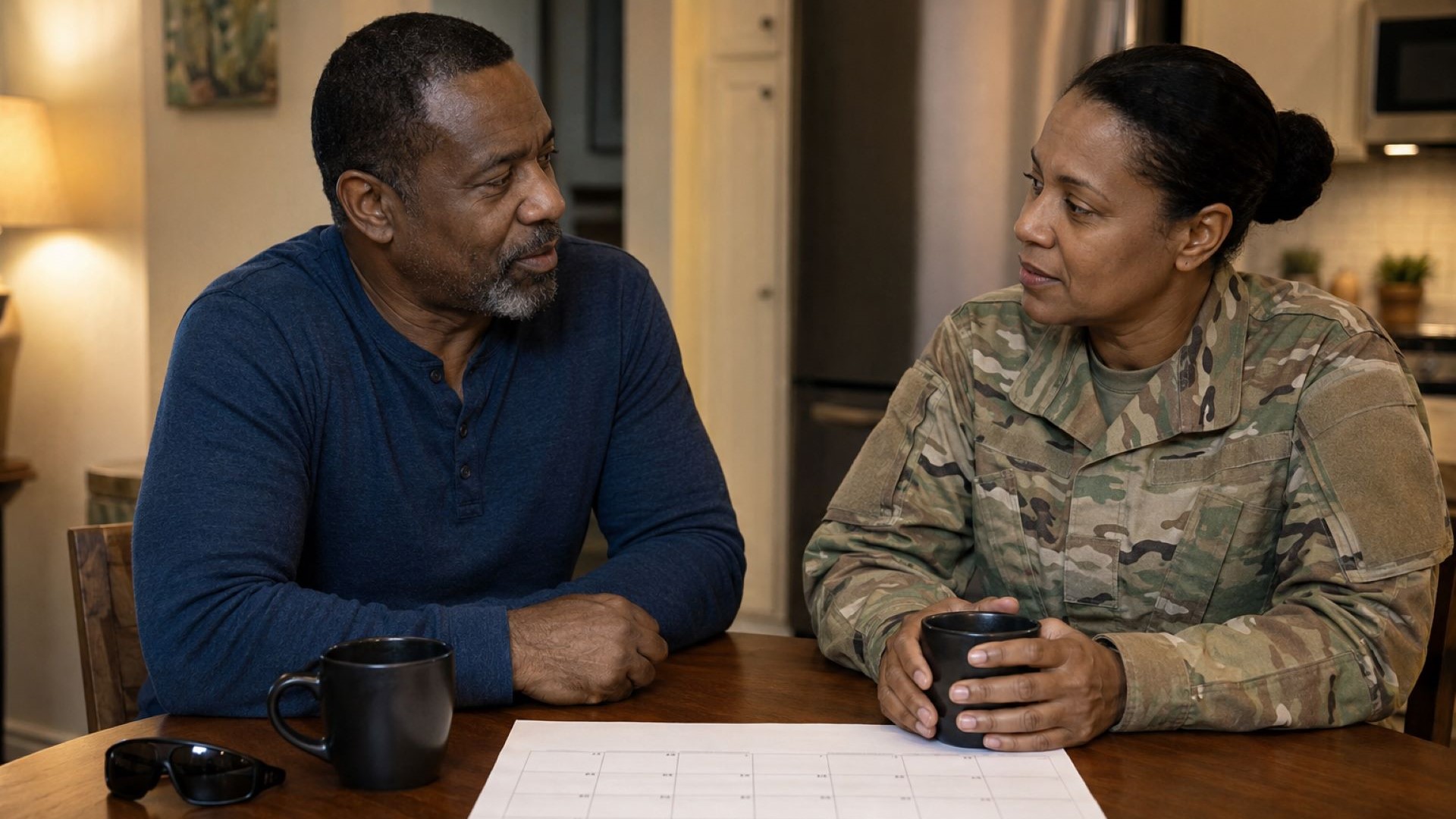
A military couple listens to each other during a calm planning conversation at their kitchen table.
A regular check-in creates space to listen, adjust, and make decisions together.

4. Find a Mentor

Find someone who has traveled this road longer than you have.

A seasoned mentor can help you understand what is normal, what deserves attention, and what questions you have not learned to ask yet. A good mentor will not live your life for you. He can help you see the trail when everything feels unfamiliar.

It is a little like having a Sherpa guide you toward the summit. You still have to climb, but you do not have to pretend you are the first person who has ever faced the mountain.

Your mentor does not have to match your story in every detail. Look for someone mature, honest, discreet, and willing to tell you what you need to hear.

Try this: Identify one experienced spouse, trusted friend, chaplain, family-support contact, or community leader you can approach with one specific question.

5. Enjoy Where You Are Now

Enjoy where you are now.

Military life can train you to look ahead�to the next assignment, the next return, the next promotion, or the next transition. Planning matters, but do not let the next thing steal the place where your feet are today.

Even if you return to the same location later, it will never be exactly the same. The people may change. Your family will change. You will change.

Pay attention to this season while you are living it. Learn the area. Meet people. Make memories. Take pictures. Notice what is good without pretending that everything is easy.

Try this: Choose one thing your family can experience where you live now. Put it on the calendar before the month ends.

From Surviving to Thriving

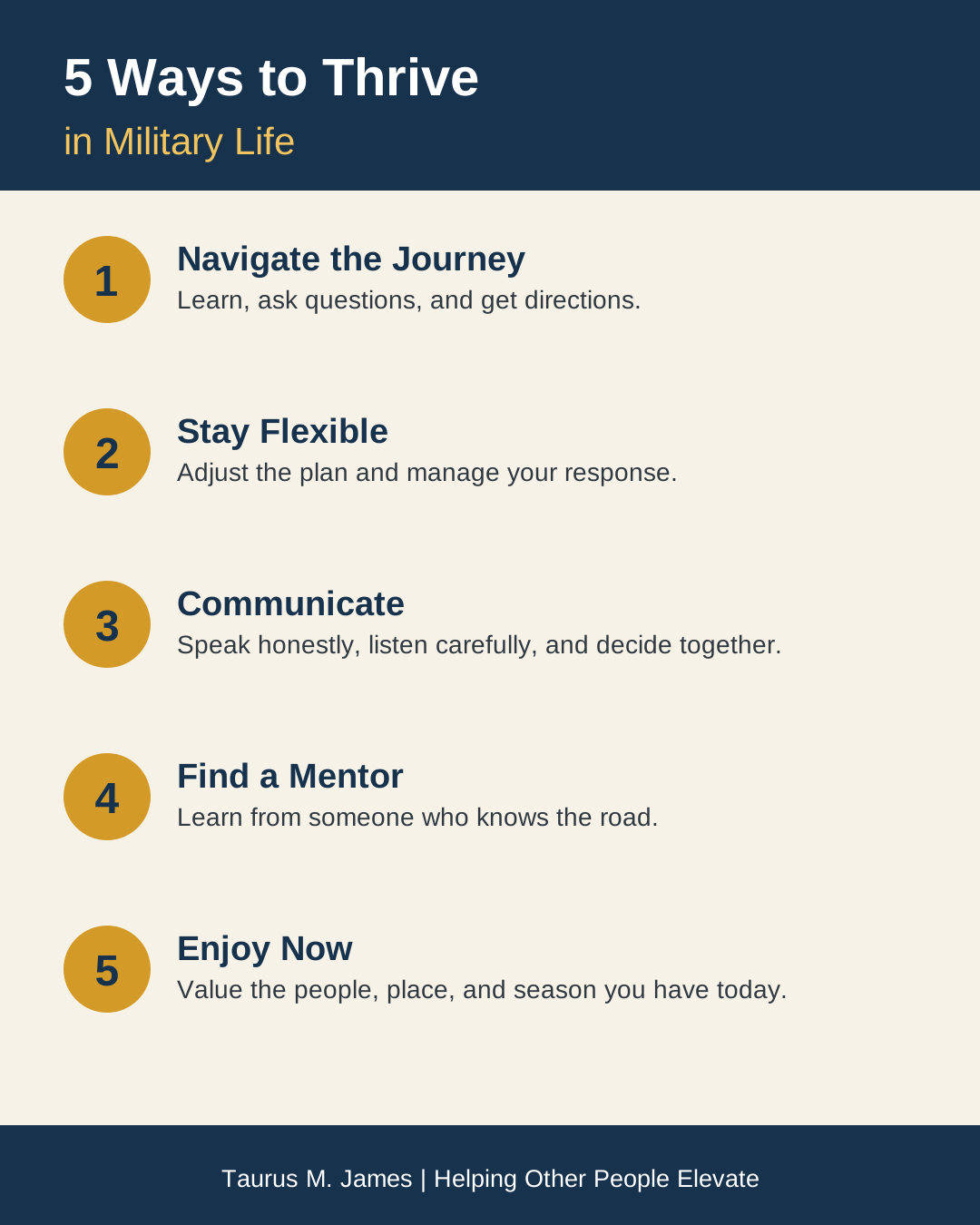
These are my top five tips for civilian male military spouses:

  1. Remember that this is a journey.
  2. Be flexible.
  3. Communicate.
  4. Find a mentor.
  5. Enjoy where you are now.

I have more, but these are the big ones for me.

Thriving does not mean every assignment will be easy or every plan will work. It means you learn how to move through change without losing yourself, your relationships, or your ability to see the good in the season you are in.

Five ways to thrive in military life: navigate the journey, stay flexible, communicate, find a mentor, and enjoy now.
Five practical ways to move from surviving military life to thriving in it.

Leave a Tip

Help a new civilian male military spouse. What helped you move from surviving military life to thriving in it? Leave one practical tip in the comments below.

Grace and Peace!

Taurus M. James is a 25+ year civilian male military spouse, composer, minister, and creator focused on Helping Other People Elevate in music and life.

image for Embracing Moments of Joy: How Emotional Presence Helps Create a Beautiful Home

Trauna came home after getting her hair done, and she was smiling.

It was one of those smiles that changed the atmosphere in the room. She felt good about herself, and it showed. Our daughter, Tami, and I noticed immediately. We celebrated her new look, complimented her, and shared in her happiness.

This may sound like a small moment. In many ways, it was.

There was no ceremony. No major announcement. Nobody had earned an award or reached a career milestone. My wife felt beautiful, and the people in her home took time to see her.

That simple experience reminded me that joy does not always arrive through major accomplishments. Sometimes it walks through the front door wearing a new hairstyle and a radiant smile.

The question is whether we are present enough to notice it.

A Beautiful Home Is an Emotional Environment

When people describe a beautiful home, they often talk about its appearance. They mention the furniture, decorations, lighting, landscaping, or cleanliness.

Those things can make a space comfortable, but the emotional environment determines how a home feels.

A beautiful home is a place where people feel seen. They know their emotions matter. They are free to express happiness without having it dismissed and free to express pain without being treated like a problem.

Military life can make that environment difficult to maintain. Assignments change. Schedules shift. Separations happen. Professional responsibilities can follow the service member through the front door. The civilian spouse may also carry work, parenting, household responsibilities, personal ambitions, and the emotional weight of keeping the family connected.

We cannot control every demand placed on our families. We can help manage what happens when everyone comes home.

Learn to See the Person

Supporting your wife begins with seeing her as a whole person.

She has responsibilities, but she is more than what she accomplishes. She has a military role, but she is more than her rank or position. She has goals, fears, disappointments, interests, and parts of herself that may receive little attention when duty becomes demanding.

That afternoon, Trauna did not need an analysis from me. She did not need me to turn her happiness into a lesson. She needed her family to recognize what she was feeling and join her in it.

We saw her joy.

Then we made room for it.

Emotional support sometimes means helping someone through pain. It also means knowing how to celebrate their happiness without minimizing it, interrupting it, or redirecting attention toward yourself.

Listen Before You Try to Fix Anything

Many men have learned to respond to an emotional concern by searching for a solution. We hear a problem and immediately start developing a plan.

Solutions have their place. So does silence.

Your wife may need advice, practical help, space, reassurance, or someone who will listen without trying to control the outcome. You will not know which one she needs if you do not listen.

Active listening requires attention. Put down the phone. Look toward her. Let her finish. Ask questions that help you understand instead of questions that lead her toward your preferred answer.

Validation does not require you to agree with every conclusion. It means acknowledging that her experience is real and worthy of consideration.

You can say:

  • I can understand why that affected you.
  • Thank you for telling me.
  • Do you want me to listen, help you think through it, or give you some space?
  • What would support look like for you right now?

These are simple questions, but they communicate respect.

Create a Home Where Communication Is Safe

Open communication cannot survive where honesty is punished.

If your wife tells you she is exhausted, disappointed, afraid, or overwhelmed, resist the urge to become defensive. Her feelings are not automatically an accusation against you. They are information about what is happening within someone you love.

The same principle applies to children. They need room to express their emotions without being mocked, dismissed, or immediately corrected.

A safe home does not mean everyone always agrees or remains calm. It means the family can work through difficult emotions without threatening the relationship.

As a husband and father, I want my family to know that their honesty will not cause me to disappear. I may need time to process what I hear. I may make mistakes in how I respond. I still want to remain present.

Presence builds trust through repetition.

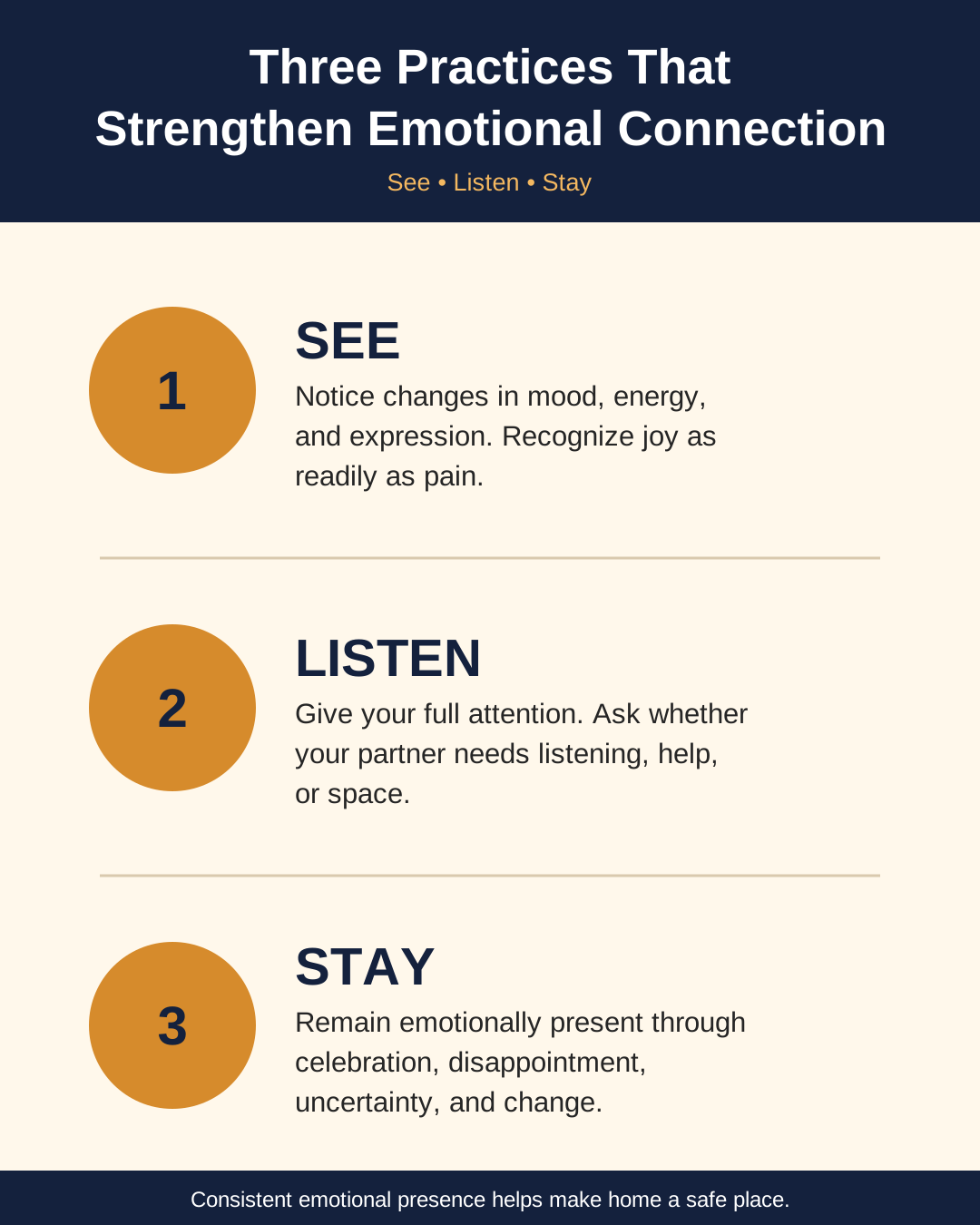
Three practices that strengthen emotional connection: See changes in mood and recognize joy; Listen with full attention and ask what support is needed; Stay emotionally present through celebration, disappointment, uncertainty, and change.
Consistent emotional presence helps make home a safe place.

Protect Your Own Emotional Health

Supporting your family does not mean ignoring yourself.

Civilian male military spouses can become so focused on the service member's career and the family's needs that they lose touch with their own emotions, identity, and direction. That eventually affects the entire household.

You need healthy outlets. You need friendships, meaningful work, rest, spiritual grounding, physical activity, and opportunities to create or grow. You also need the honesty to recognize when stress, resentment, loneliness, or exhaustion is beginning to shape your behavior.

Self-care is not an escape from responsibility. It helps you meet responsibility with greater stability.

You cannot offer calm consistently when you never make room to become calm.

Create Joy Intentionally

Some joyful moments happen unexpectedly. Others need to be created.

You do not need an elaborate trip or expensive gift. Consider what makes your wife and children feel known.

It could be:

  • Preparing a favorite meal
  • Taking an evening walk together
  • Playing music everyone enjoys
  • Revisiting family photographs
  • Celebrating a small accomplishment
  • Protecting time for an unhurried conversation
  • Leaving an encouraging note
  • Giving a sincere compliment without expecting anything in return

The value of the gesture comes from attention. It says, "I know you. I see what matters to you. Your joy matters to me."

Celebrate the Person Behind the Achievement

Military families regularly celebrate promotions, awards, graduations, new assignments, and retirements. These milestones deserve recognition.

We should also celebrate the person who carried the pressure behind the achievement.

Recognize the discipline, sacrifice, courage, and persistence involved. Pay attention to what the journey cost emotionally. Make room for mixed feelings, especially during transitions. Pride and grief can exist together. Excitement and uncertainty can share the same room.

Celebration becomes more meaningful when it acknowledges the whole experience.

Express Appreciation While You Have the Opportunity

Gratitude should not remain an unspoken thought.

Tell your wife what you appreciate about her. Be specific. Acknowledge what she contributes to the family, including the things other people may never see.

Tell your children what you notice in them. Celebrate their character, compassion, effort, and growth instead of focusing only on performance.

We often assume the people closest to us already know how we feel. Sometimes they do. They still need to hear it.

Words can help turn an ordinary moment into a lasting memory.

A family shares quiet conversation and memories in a warm, emotionally safe home.

The Moments That Make a Home

I still remember Trauna's smile.

I remember how her happiness moved through the room and how Tami and I became part of that happiness by recognizing it. We did not create the joy she brought home, but we helped it grow.

That is one way we build a beautiful home.

We pay attention. We listen. We celebrate. We remain present when life is joyful and when it becomes difficult. We give the people we love room to be fully human.

Civilian male military spouses have a meaningful role in shaping the emotional environment of their families. We cannot remove every pressure associated with military life. We can help create homes where our wives and children feel safe, valued, supported, and seen.

Do not overlook the ordinary moments.

They may become the memories your family carries longest.

Grace and Peace.