I understand why people say it. Military life can change quickly. Orders shift. Plans move. Time together gets interrupted. A new spouse can feel like everybody else received a map that somehow missed his mailbox.
But I do not want you to spend this journey thinking only about survival. I want you to learn how to thrive.
After more than 25 years as a civilian male military spouse, these are five of the biggest lessons for me. They apply to male and female military spouses, but I am speaking directly to the men who may still be trying to understand where they fit.
1. Remember: This Is a Journey
This is a journey.
Yes, I want you to get tired of hearing me say it, because remembering it can change how you handle the next surprise.
You do not have to know everything at the beginning. Learn how to navigate. Ask questions. When you do not know where to go, ask for directions. Military life comes with its own language, systems, expectations, and unwritten rules. Pretending to understand them will not help you or your family.
Give yourself permission to learn as you go.
Try this: Write down the three things about military life that confuse you most. Ask your spouse or an experienced military spouse to walk through them with you.
2. Be Flexible
Life as a civilian male military spouse can feel a little like yoga. Flexibility helps, and sometimes you have to improvise to keep from falling over.
Plans can change with little warning. A date, trip, celebration, or family routine may have to move. Flexibility does not mean you stop planning or act as if disappointment does not matter. It means you learn how to adjust without allowing every change to control the emotional climate of your home.
You may not control the orders. You can manage your response.
Try this: When a plan changes, ask two questions: "What has actually changed?" and "What can we still do?" Those questions move you from frustration toward action.
3. Communicate Like Your Life Together Depends on It
Communicate. Then communicate some more.
Military life creates pressure, and pressure exposes weak communication. Do not assume your spouse knows what you are thinking. Do not wait until frustration turns into resentment. Say what you need to say with honesty and respect. Listen for what your spouse is carrying too.
Good communication will not remove every hard situation. It can keep the two of you from treating each other like the problem.
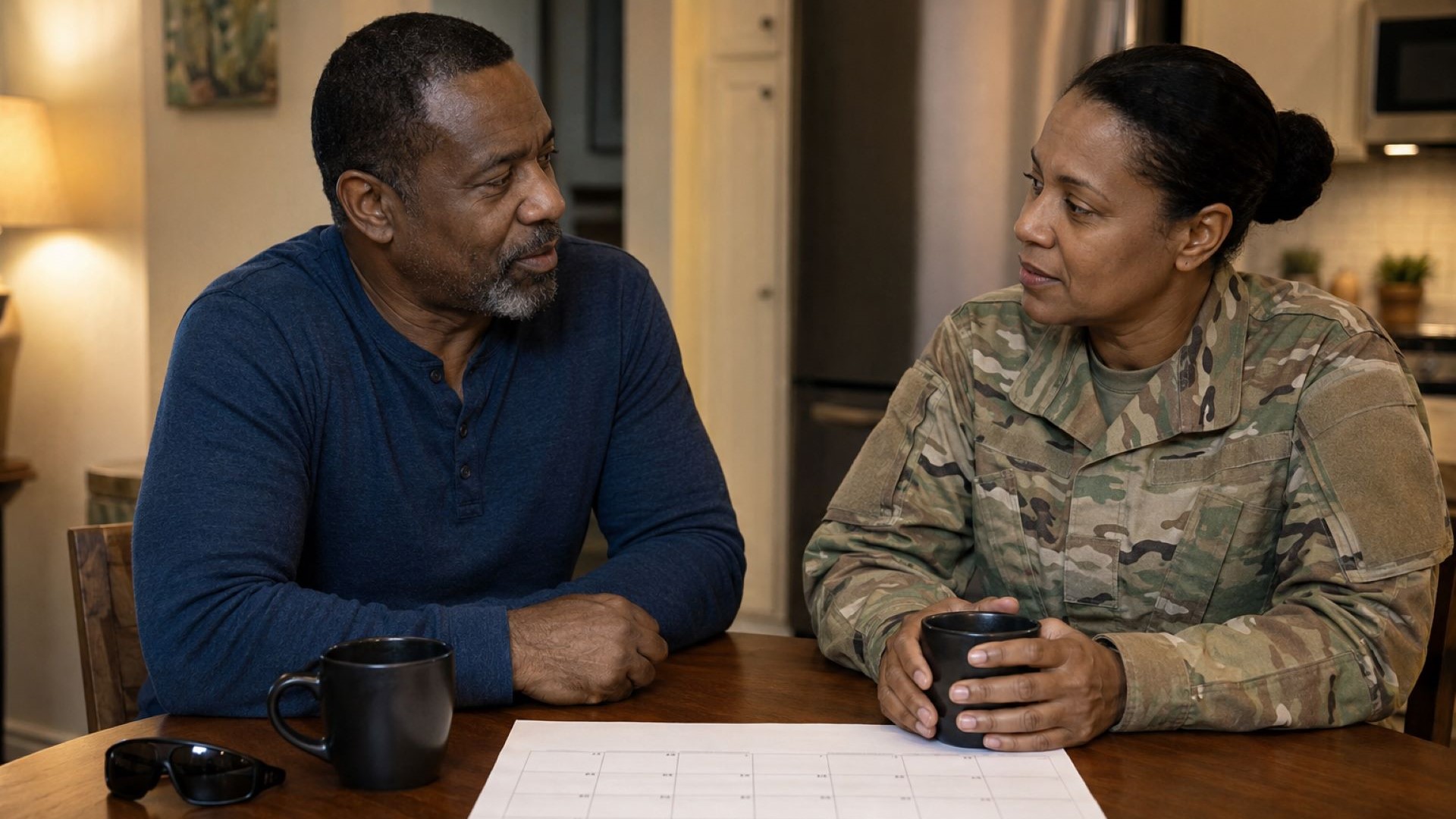
Try this: Set a regular check-in with your spouse. Ask what is changing, what each of you needs, and what decisions you need to make together.
4. Find a Mentor
Find someone who has traveled this road longer than you have.
A seasoned mentor can help you understand what is normal, what deserves attention, and what questions you have not learned to ask yet. A good mentor will not live your life for you. He can help you see the trail when everything feels unfamiliar.
It is a little like having a Sherpa guide you toward the summit. You still have to climb, but you do not have to pretend you are the first person who has ever faced the mountain.
Your mentor does not have to match your story in every detail. Look for someone mature, honest, discreet, and willing to tell you what you need to hear.
Try this: Identify one experienced spouse, trusted friend, chaplain, family-support contact, or community leader you can approach with one specific question.
5. Enjoy Where You Are Now
Enjoy where you are now.
Military life can train you to look ahead�to the next assignment, the next return, the next promotion, or the next transition. Planning matters, but do not let the next thing steal the place where your feet are today.
Even if you return to the same location later, it will never be exactly the same. The people may change. Your family will change. You will change.
Pay attention to this season while you are living it. Learn the area. Meet people. Make memories. Take pictures. Notice what is good without pretending that everything is easy.
Try this: Choose one thing your family can experience where you live now. Put it on the calendar before the month ends.
From Surviving to Thriving
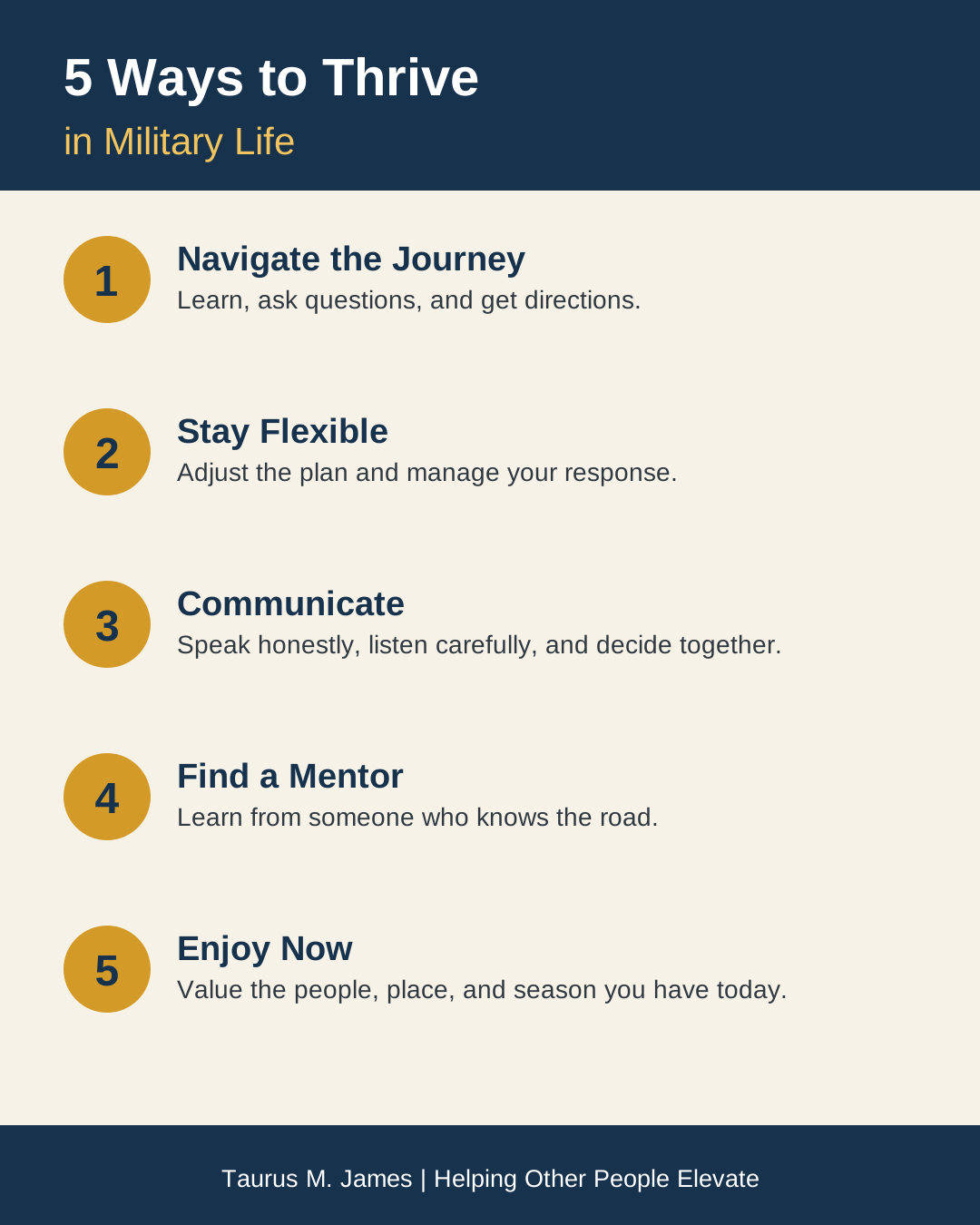
These are my top five tips for civilian male military spouses:
- Remember that this is a journey.
- Be flexible.
- Communicate.
- Find a mentor.
- Enjoy where you are now.
I have more, but these are the big ones for me.
Thriving does not mean every assignment will be easy or every plan will work. It means you learn how to move through change without losing yourself, your relationships, or your ability to see the good in the season you are in.
Leave a Tip
Help a new civilian male military spouse. What helped you move from surviving military life to thriving in it? Leave one practical tip in the comments below.
Grace and Peace!