Purpose does not remove every problem. It does not guarantee calm circumstances or replace mental-health treatment. It gives direction when the future feels unclear. It reminds us who we are, Whom we trust, and what we can do next.
The peace of purpose begins when we stop trying to carry the whole future at once.
Peace Is Not the Same as Control
Many of us tell ourselves we will have peace after everything is settled.
After the decision.
After the diagnosis.
After the money arrives.
After the relationship improves.
After the plan works.
But life rarely offers complete certainty. If peace depends on controlling every outcome, peace will always remain out of reach.
Jesus told His disciples, “Do not let your hearts be troubled. You believe in God; believe also in me” (John 14:1). He spoke those words before a period of confusion, loss, and fear. His promise was rooted in His presence and character, not in easy circumstances.
Biblical peace is not denial. It is settled trust in the middle of reality.
Purpose Brings the Mind Back to the Present
Anxiety often pulls us into a future we cannot see.
Purpose asks a more useful question: What has God placed in my hands today?
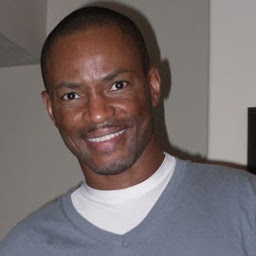
As a husband, father, minister, mentor, musician, and builder, I carry several roles. If I try to solve every need in every role at the same time, my thoughts become scattered. I have to return to the assignment in front of me.
Who needs my presence now?
What work needs my honest attention?
What decision belongs to today?
What can wait?
Purpose narrows the field. It turns vague pressure into a faithful next action.
The GUARD Practice
Scripture tells us to guard the heart because everything we do flows from it (Proverbs 4:23). Guarding your mind does not mean hiding from reality. It means managing what enters, what remains, and what directs you.
Ground Yourself in What Is True
An anxious mind can make a feared possibility feel like a present fact.
Begin by separating what is true from what you are predicting.
Write two short lists:
-
What do I know right now?
-
What am I assuming, predicting, or fearing?
Then ground yourself in God's character.
God is present.
God is faithful.
God has carried me before.
I am loved before I perform.
I am responsible for faithfulness, not total control.
Philippians 4:8 calls us to think about what is true, noble, right, pure, lovely, admirable, excellent, and praiseworthy. This is not an invitation to pretend problems do not exist. It is instruction to stop feeding the mind with distortion.
Understand What You Can and Cannot Control
You can prepare. You cannot guarantee the result.
You can speak honestly. You cannot control another person's response.
You can care for your body. You cannot prevent every illness.
You can publish useful work. You cannot force the algorithm to reward it.
You can guide a young person. You cannot make every decision for him.
Draw a line down the center of a page. Label one side My Responsibility and the other Outside My Control.
Put each concern where it belongs.
Then act on your side of the page and release the other side to God.
This is not indifference. It is humility. You are accepting the limits of your authority.
Aim Your Attention
Attention behaves like a spotlight. Whatever stays under it begins to feel larger.
If you repeatedly aim your attention at outrage, comparison, danger, and failure, your nervous system may begin to experience the world as one continuous threat.
Set boundaries around inputs that agitate your mind:
-
Choose specific times to check news and social media.
-
Turn off nonessential notifications.
-
Avoid beginning and ending the day inside a feed.
-
Protect quiet time for prayer, movement, and reflection.
-
Spend time with people who tell the truth without feeding panic.
You do not need to know everything happening everywhere to fulfill your purpose today.
Respond With the Next Purposeful Action
When the mind is overwhelmed, shrink the assignment.
Take one walk.
Make one phone call.
Write one paragraph.
Clean one surface.
Pray one honest prayer.
Complete one promised task.
Ask one person for help.
Purpose becomes stabilizing when it becomes action. A small faithful action cannot solve every problem, but it can break the paralysis created by trying to solve everything at once.
My mission is HOPE: Helping Other People Elevate. On an anxious day, I do not need to elevate the whole world. I can help one person. That brings the mission back within reach.
Draw Support When the Burden Is Heavy
Some burdens should not be carried alone.
Talk with a trusted friend, pastor, mentor, counselor, or physician. If anxiety is persistent, causes panic, disrupts sleep, affects work or relationships, or makes daily life difficult, seek help from a licensed mental-health professional.
Prayer is important. Community is important. Professional care can also be important.
Receiving help is not a failure of faith. It is a responsible decision about your health.
Build a Daily Peace Rhythm
Peace is easier to protect when your days have anchors.
Try this rhythm:
Morning — Truth before noise: Give God your first attention. Read a short passage. Name three things that are true.
Midday — Body check: Unclench your jaw. Lower your shoulders. Breathe slowly. Drink water. Take a short walk if you can.
Afternoon — Purpose check: Identify the one responsibility that most deserves your attention.
Evening — Release: Write down unfinished concerns. Decide what belongs to tomorrow. Pray over what remains outside your control.
The goal is not to manufacture a perfect feeling. The goal is to create conditions that help your mind return to truth, presence, and faithful action.
Purpose Is a Compass
A compass does not remove rough terrain. It keeps you from losing direction inside it.
Your purpose works the same way.
When fear says, “Solve your entire future,” purpose says, “Take the next faithful step.”
When comparison says, “You are behind,” purpose says, “Manage what God placed in your hands.”
When noise says, “Everything deserves your attention,” purpose says, “Choose what matters.”
When shame says, “Carry this alone,” wisdom says, “Draw support.”
You may still experience anxious thoughts. You may need rest, counsel, treatment, changed circumstances, or time. Do not measure your faith by whether you ever feel anxious.
Guard your mind.
Return to truth.
Accept your limits.
Aim your attention.
Take the next purposeful action.
Let God hold what you cannot.
Suggested CTA
Download a future GUARD Your Mind Daily Worksheet with the control exercise, truth prompts, attention audit, and next-action planner.